A boomerang employee is someone who leaves an organization for other opportunities elsewhere, and then later returns to work at the first business again.
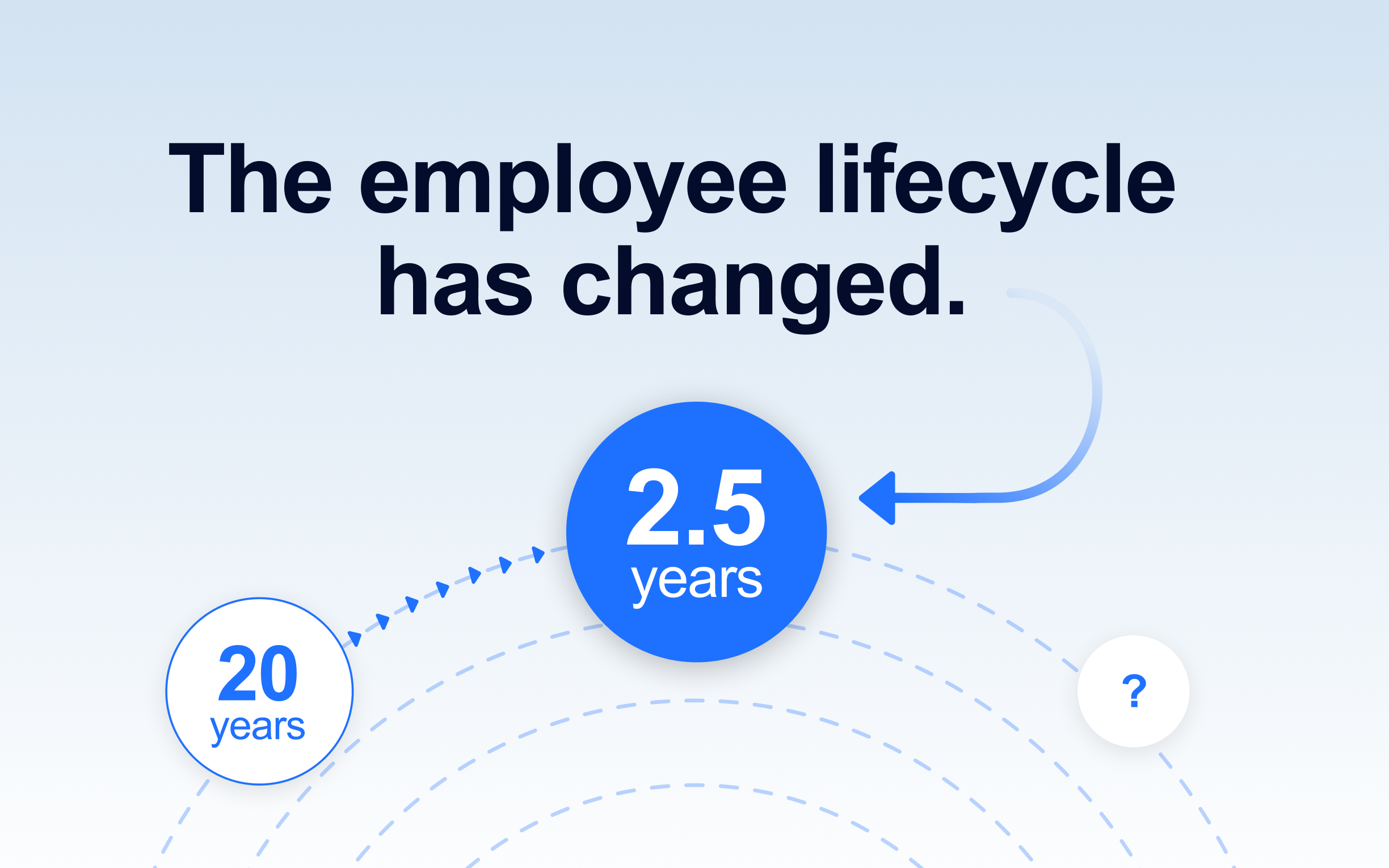
Twenty years ago, there was no such term for these types of employees because they were so rare. Once you left an organization, that was it, there was no going back.
But today, boomerang employees represent more than a third of those starting a “new” job.
According to ADP Research, 35% of all new hires in March 2025 were returning employees, the highest share in their data that goes back to 2018.
Where once leavers were shunned and a returning employee was an embarrassment, now boomerang employees are a valuable asset to organizations.
Attracting them is now strategic. To be effective, you need the right rehiring program and an alumni management platform that helps you track and engage every one of your ex-employees with personalized content and tailored job offers.
What is a boomerang employee?
A boomerang employee describes someone who previously worked at a business, left to take a job elsewhere, and then returns to the first organization to take up a role.
It could be a new role, or the same one they left. The gap might be a few months or several years.
A boomerang employee comes back knowing the culture, the systems, and the people, bringing the new skills and perspective they gained while they were away.
It's the time away that creates the value when they return.
Increasingly, we’re seeing employees boomerang more than once - the square boomerangs.
What is a "square boomerang"?
A square boomerang is a term we’re seeing in large alumni programs for someone who leaves, returns, leaves again, and returns a second time.
It emphasizes something extremely important for HR departments and those overseeing rehiring programs.
People move more often and more freely than they used to, and the stigma that once came with going back has gone.
Employees aren’t just moving once, or twice. They’re moving multiple times and are always open to returning, which is exactly why staying in touch and engaged with ex-employees is more important than ever.
Why do employees leave in the first place?
There are many reasons why employees leave an organization, and it’s important for HR to understand why, and not take things personally.
While more and more HR departments are recognizing the nature and value of boomerang hires, there are still some entrenched ways of thinking about ex-employees.
- “They’ve left, why should we care about them”
- “We don’t owe ex-employees anything”
- “They’re dead to us”
But the world has changed. Employee behavior has changed. Those who recognize why people leave - and embrace it - will benefit when boomerang employees are ready to return. The majority of reasons why employees leave are temporary and fixable, including:
- Limited progression opportunities
- Compensation
- Management or people clashes
- Unsuitable working arrangements
- Culture drift
- Life changes
What matters is that employees are looking for a change now. They’re not saying they won’t be back when the conditions suit them.
How common are boomerang employees?
They’re no longer unusual, and are becoming more and more commonplace across every sector.
ADP's data shows returning employees made up around 26% of new hires in March 2022, at the peak of the Great Resignation. By March 2024 - 31%. By March 2025 - 35%.
According to another report in Business Insider, boomerang hires doubled from 2024 to 2026.
Employer attitudes moved with it. LinkedIn's 2024 Workplace Report found boomerang hiring had grown 35% since 2022, with 68% of HR leaders saying they were more open to rehiring former employees than ever before.
Why do employees come back?
As with leaving, there are many different reasons why an employee might want to return. More often than not, it’s personal. But we can group these reasons into three key categories:
- The new job didn't match the pitch. Research published in Harvard Business Review found the most common reason for returning was that the new employer failed to deliver what it promised at interview.
- Regret. Research from UKG found that 43% of people who quit during the pandemic believed they were better off in their old job, and nearly one in five had already gone back.
- The barrier disappeared. Someone who relocated for a job in 2021 once faced moving back in order to return. Remote and hybrid work removed that. The path back no longer requires uprooting a family.
Why boomerang employees are so valuable
A boomerang hire is not usually a discount hire when looking at salary alone. With more experience under their belt, they typically return on higher pay.
The savings come from somewhere else.
They already know the culture
A returning employee knows the ins and outs of an organization from the get-go. They know who makes decisions, how to move things forward and what matters most. With no onboarding period needed, they hit the ground running.
They reach full productivity roughly twice as fast
New hires in knowledge roles typically take six to twelve months to reach full output. HR Morning's research suggests boomerang employees cut that ramp-up by about half, because they retain institutional knowledge and working relationships.
They come back with skills someone else paid for
When an employee spends two years at a competitor or in an adjacent industry, they develop new insights, new capabilities and new connections. Then they return with those skills, plus the ability to apply them inside a business they already understand.
Super training paid for by someone else. They've also seen a competitor's operation from the inside, bringing extremely valuable insight to your team.
They stay longer
The obvious objection to rehiring is that someone who left once will leave again, but in reality, boomerang employees show 44% higher retention over three years than completely new hires.
They’ve been to the other side, tested the greener grass and no longer have the urge to see what else is out there.
They cost significantly less to hire
Harvard Business Review's analysis of alumni rehiring found organizations can cut per-hire costs by up to 50% when they prioritize former employees over external candidates.
There are cost savings at every stage of the hiring process. No agency fees, which often amount to a significant percentage of first-year salary. Faster screening and referencing, because you have actual performance history. Shorter onboarding, and fewer early-tenure mistakes.
They're a known quantity
An external hire is a best guess based on a résumé and three conversations. A boomerang hire is a documented record. You know how they performed, how they handled pressure, and who they worked well with.
Visier found that around a quarter of returning employees were high performers before they left, so those boomerangers are often above-average contributors.
Rehiring sends a message to the people who stayed
The least obvious benefit, and one of the most valuable, is the message that rehiring sends to your existing employees, and the culture it builds in your organization.
It shows employees how departures get treated, and how they’re welcomed back. Leaving isn’t a betrayal that leaves a locked door.
This not only gives employees permission to learn new skills elsewhere and return better equipped to help your organization, it also changes the attitude of those leaving. They’ll say goodbye positively. They’ll speak highly of you. They’ll stay loyal to you.
Are there risks in rehiring a former employee?
Potentially yes, as with any other hire. The key question to ask before deciding if you should rehire a former employee is whether things have changed.
- If the reason they left hasn't changed, they'll leave again
- If they’re returning to the same role as a different person, it might not work
- If they’re back with managers who took the departure personally, there could be problems
But none of these reasons should prevent rehiring. They should just be considered as part of a deliberate rehiring process. There are several questions you can ask and tips to follow when rehiring a boomerang candidate.
When is the right time to approach a boomerang candidate?
A Harvard Business Review study found that 26% of boomerang employees return within seven months of leaving, and more than three-quarters have returned by month 16. The average time away is around thirteen months.
After the 16-month mark, the likelihood of a return drops away. Before six months, the job still feels new, and any doubts are easy to dismiss. After 16 months, an employee is usually well settled.
That gives you a clear window to target, when regret has set in, but institutional memory is still fresh.
To capitalize on that, you need a platform that tracks your ex-employees - your alumni - when they leave and times campaigns accordingly.
You need an alumni management platform.
An alumni management platform helps you keep track of every employee who leaves your organization. It provides a single source of truth on who they are and where they are, so you can stay connected as they develop their skill set elsewhere.
An effective alumni management platform helps you engage those employees who are potential boomerang candidates and run the specific campaigns that are aimed at rehiring.
How to run a boomerang hiring campaign that works
- Start at the exit interview. Offboarding is the first step of rehiring, because how someone leaves largely determines whether they ever return.
- Keep the data alive. People change employers, roles, locations, and email addresses regularly, so you need a platform that keeps up-to-date, accurate information on your alumni.
- Time the outreach deliberately. Build a workflow that engages ex-employees at nine months post-departure, with roles matched to their actual skills and their current location. It’s an acknowledgement that the door is open.
- Lead with what's changed. For this group, "we're hybrid now" or "that team has new leadership" outperforms a compensation pitch, because it speaks to why they left.
- Deal with the internal attitude. Make sure hiring managers are clear on the business case for rehiring - the retention figures, the ramp-up advantage, and the cost savings - to avoid internal resistance.
- Measure it. Track boomerang hires as a proportion of total hires, and the cost per hire against your external benchmark to see the value they bring.
The right platform makes boomerang hiring simple
When you know who left, when they left, where they went, what they're doing now, and what would actually interest them, you can engage ex-employees effectively.
You can personalize content, you can time emails perfectly and you can maintain a positive relationship with them.
When they’re ready to return, they’ll know exactly where to look.
That's what a corporate alumni platform is for. It keeps your data fresh, your ex-employees engaged and your re-hiring opportunities front and center.
An alumni management platform from Aluminati helps you attract those boomerang hires and maximize their value.
Book your demo today to see how it flexes for your organization.